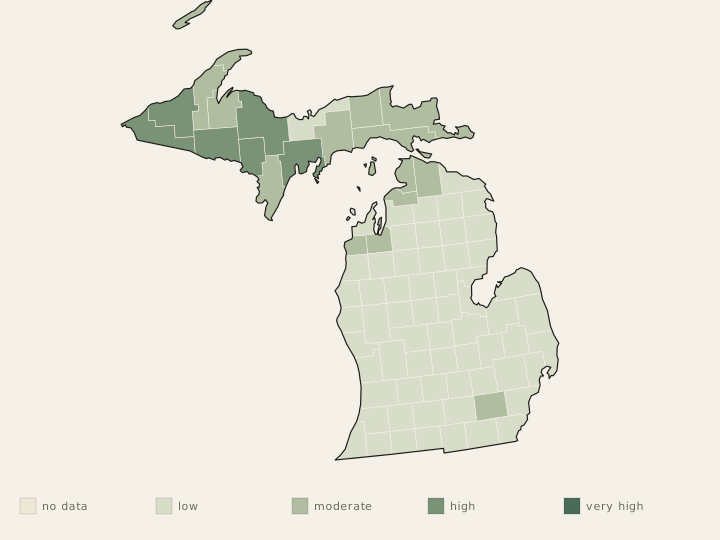
Common species in Michigan
Michigan follows the state health led source pattern. The species below are drawn from the state-authority sources listed in the sidebar Data Row.
- Blacklegged tick
- American dog tick
- Lone star tick
- Woodchuck tick
- Brown dog tick
- Asian longhorned tick (animal/livestock context)
- Lone star tick (where MDHHS/MSU document local establishment or expansion)
When ticks are most active
American dog tick: most active spring through mid-summer, with May to early July as the practical peak window. Blacklegged tick: nymph activity May-July and adult activity in spring and fall. Lone star tick: April through late August where present. Broad prevention caution spring through fall.
Where you're most likely to encounter ticks
Lower Peninsula and Upper Peninsula forests, wooded and grassy trail edges, low forest vegetation, human/animal trails, yards near brush or woods, dog walking, hunting/camping, and woodchuck/skunk den areas for woodchuck tick context.
Disease context
Each disease named below carries an evidence tag per the Data Row policy. Pills indicate the strength of state-specific evidence, not the severity of the disease. Symptoms should always be routed to a clinician; this is orientation, not diagnosis.
- Lyme disease state surveillance confirmed
- Anaplasmosis state surveillance confirmed
- Powassan virus disease state surveillance confirmed
- Babesiosis state surveillance confirmed
- Rocky Mountain spotted fever non diagnostic mention only
- Tularemia non diagnostic mention only
- Ehrlichiosis regional pattern
- STARI regional pattern
- Alpha-gal syndrome regional pattern
If you find a tick — what to do
Map resolution notes
mixed resolution. MDHHS, MiTracking, MSU, and CDC sources support state-level, peninsula-level, and some officially supported county-level statements, but not all species, disease, density, or expansion claims are county-supported. Use county-level claims only where MiTracking or another official county-level source supports that exact field; keep general species/range claims at state or peninsula level when the source resolution is broader.
State sources
- Primary species source
- MDHHS ticks page and MDHHS Michigan's Five Most Common Ticks fact sheet for state tick/species framing; MSU Extension for seasonal, habitat, and expansion nuance.
- Primary health source
- MDHHS Ticks and Your Health booklet, MDHHS Tickborne Diseases in Michigan clinician reference, and MDHHS ticks/tickborne disease pages for disease and clinician-routing context; CDC Powassan pages for national Powassan context.
- Primary extension source
- MSU Extension "What You Need to Know About Michigan's Ticks" and MSU Extension tick facts PDF for species activity, expansion, habitat, prevention, and removal detail.
- Surveillance
- MiTracking Michigan Ticks metadata PDF, MDHHS tick identification/submission resources, MDHHS disease/tick pages, MSU Extension tick resources, CDC Where Ticks Live, and CDC Powassan data/maps where map or surveillance context is used.